

New article out!
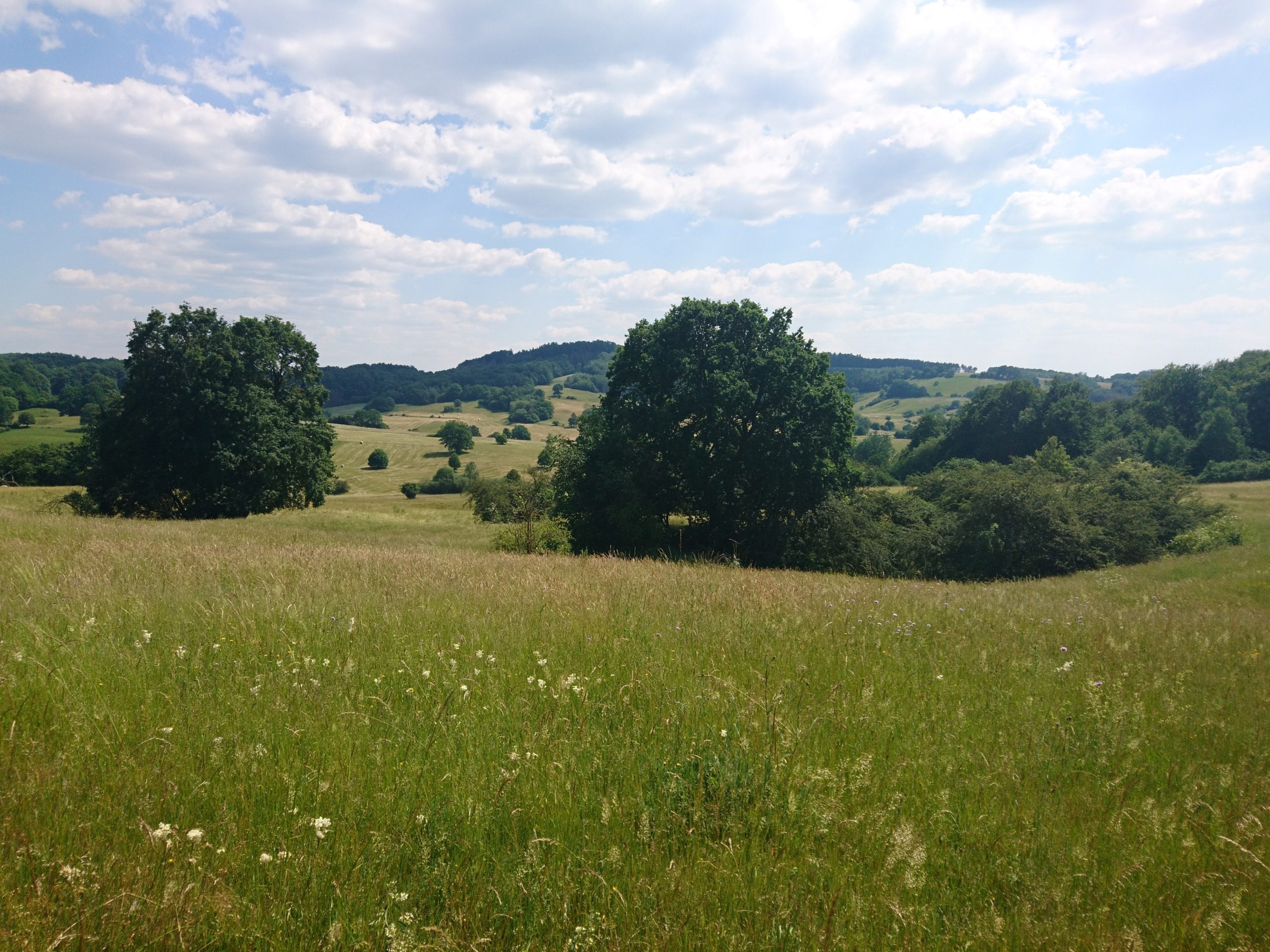
The picture shows a mosaic of biodiverse grasslands, trees and forests shaped by human activities in the protected karst landscape of Hainholz, Central Germany. Protected areas are often seen as refuges for plants and animals – yet they are also places where people live, work, and relax. Lead author Marion Jay explains: “We wanted to understand how people perceive their personal relationships with nature and how protected areas shape these bonds.” Marion Jay and co-authors analyzed personal stories from residents, land managers, and visitors in protected areas of Göttingen County. Their findings reveal that protected areas foster local identity, support learning about nature, and provide spaces for recreation, cooperation, and community engagement.
To explore these connections, the researchers conducted 38 interviews with farmers, foresters, hunters, conservationists, people visiting for recreation and more across five Natura 2000 sites in southern Lower Saxony. The interviews revealed multiple dimensions of connection – from knowledge and learning to emotions and institutional relationships. Based on these accounts, the team identified five central narratives: learning, regional heritage, care, multifunctional use, and collaboration.
These stories show that experiences in nature are closely tied to feelings of responsibility and belonging. Interviewees spoke of how walks through meadows and forests encourage mindfulness, how community forests shape local identity, and how farmers and foresters see themselves as “caretakers” of the landscape. Some activities such as extensive livestock farming support biodiversity conservation but also farmers’ livelihoods in protected areas, shaping identities and a sense of responsibility towards nature. “Understanding these complex relationships is of particular importance in protected areas where human activities shape landscapes and biodiversity conservation”, says Jay. “If we take people’s stories and perspectives seriously, protected areas can become spaces where ecological and social goals go hand in hand.”
The research team sees strong potential in using narrative approaches for conservation practice: they can help make local experiences visible, improve understanding of conflicts, and identify opportunities for joint landscape stewardship. The researchers recommend supporting dialogue platforms and long-term collaborations to strengthen protected areas as vibrant parts of cultural and living landscapes. Co-author Romina Martin reflected: “Nature protection is not happening in isolation from people and societies. On the contrary, it’s dependent on continuous interaction, and the dependency is mutual.”
- Reference: Jay, M., Cortés-Capano, G., Martin, R., Suntken, J., & Plieninger, T. Exploring narratives of human-nature connections in protected areas. People and Nature (2025). DOI: 10.1002/pan3. 70195
- Blog entry: https://relationalthinkingblog.com/2025/10/22/plain-language-summary-understanding-how-people-connect-to-protected-areas/
- Related news report at the Stockholm Resilience Centre: https://www.stockholmresilience.org/research/research-stories/2025-12-17-how-do-people-connect-with-protected-areas.html
